


In today’s unpredictable business environment, marked by rapid technological changes, shifting workforce expectations, and ongoing economic disruptions, it’s easy for leaders to focus on immediate concerns. All genuine concerns, such as hitting the quarterly goal, launching the next product, and handling the crisis at hand.
But those of us who have spent years inside organizations know something fundamental: short-term wins don’t build long-term companies. What does? A disciplined, people-centered approach to Organizational Development (OD).
At TCG, we’ve spent more than 25 years helping organizations navigate complexity through executive search, interim leadership, and human capital consulting. Over and over, we’ve seen the same pattern: companies that intentionally invest in OD don’t just manage change, they capitalize on it. They build cultures that attract talent, leadership pipelines that sustain momentum, and operating models that actually work in real life, not just on paper. Yet OD is still misunderstood. So, let’s clarify what it really means in 2025 and why it has become the quiet engine behind organizational longevity.
What Organizational Development Really Means Today
Organizational Development is an intentional, systematic effort to improve how an organization functions: Its culture, leadership, structures, processes, and talent systems. It’s not a training workshop or a reorg deck. It’s the connective tissue that aligns people, strategy, and execution.
And the organizations that will outperform in the coming decade look quite different from the traditional “command-and-control” models many of us grew up in. Thought leaders like Harvard Business Review have described the future as “Octopus Organizations” – flexible, decentralized, and designed to push intelligence and decision-making out, not pull it in. For OD practitioners, this is exactly the kind of adaptability we’ve been building toward for years.
The research is consistent. Effective organizations:
- encourage cooperation and flexibility
- anticipate the future rather than reacting to it
- build leaders who grow people, not just numbers
- invest in diverse, empowered teams who can respond to change with speed and creativity
In practical terms, OD is the bridge between a company’s strategy and its ability to execute that strategy through its people. Without that bridge, even the best ideas collapse under their own weight.
The High Cost of Neglecting OD
When companies underinvest in OD, the consequences are real and measurable.
- Employees who lack development are far less engaged, and disengagement drives turnover, productivity loss, and cultural erosion.
- Transformations without a talent strategy often double attrition, especially during mergers, restructuring, or major technology shifts.
- And the old McKinsey statistics still hold: most change efforts fail not because the strategy was flawed, but because the people and culture foundation was missing.
Practitioners see this up close. When HR is treated as a compliance arm rather than a strategic function, organizations experience “transformation fatigue,” burned-out leaders, talent flight, and stalled momentum.
But when OD is prioritized, the opposite happens. Cultures strengthen. Leaders grow. Agility becomes real. Companies like Apple and Michelin have shown how OD, not just strategy, creates sustainable competitive advantage.
Five Ways OD Drives Long-Term Success
Drawing from decades of practice, here’s where OD consistently moves the needle:
- Building Cultures That Can Actually Adapt: Culture isn’t an artifact; it’s the operating system. OD helps organizations align values, create feedback loops, and build environments where people feel safe to innovate and challenge old norms. Distributed decision-making, when supported through OD, accelerates innovation and retention.
- Developing Leaders at Every Level: Technical excellence alone no longer qualifies someone for leadership. Modern OD develops leaders who can coach, empower, align, and engage. Leaders who take accountability not just for performance, but for people growth and succession. This is especially critical during transitions, where strong leadership systems prevent loss of momentum.
- Aligning Structure with Strategy: A strategy that the structure can’t support will fail every time. OD ensures that the organization is designed for speed, flexibility, and clarity whether through functional models, matrix teams, or skill-based staffing.
- Enabling Continuous Learning and Talent Mobility: The half-life of skills is shrinking. Organizations that treat learning as optional will fall behind. OD creates mobility pathways, inclusive environments, and development systems that keep both skills and engagement high.
- Building the Systems That Create Sustainable Growth: Sustained success doesn’t happen by accident. OD embeds the rhythms, capabilities, and decision-making frameworks that help organizations innovate without losing stability.
What the Last Five Years Have Taught Us
From 2020 through 2025, organizations were tested more than in the previous two decades combined.
- Companies with strong OD practices shifted quickly to hybrid work, supported mental health, and reskilled talent to meet new demands.
- Those without OD foundations struggled with burnout, turnover, and stalled performance.
- Organizations that invested early in leadership development, employee experience, and cultural clarity emerged stronger, more resilient, and more attractive to top talent.
At TCG, we’ve seen this transformation firsthand through hundreds of HR placements and consulting engagements. One manufacturing client, overwhelmed by supply chain volatility, rebuilt its talent strategy through a series of OD-focused interventions, leadership cohorts, culture reset work, and interim CHRO support. The payoff? A 40% increase in engagement and sustained revenue growth. That’s OD doing what it does best: stabilizing the present while building for the future.
How Leaders Can Elevate OD in Their Organizations
If you’re serious about long-term success, here’s where to start:
- Assess honestly. Use diagnostics: culture assessments, leadership 360s, structure reviews, etc. to understand your baseline.
- Invest in your people systems. Development must be experiential, practical, and tied to real business outcomes.
- Give HR a true strategic voice. A CPO should help shape the business, not react to it.
- Use experts when needed. Interim leaders and OD specialists can stabilize transitions and accelerate progress.
- Measure the right things. Engagement, retention, innovation velocity, and adaptability; not just revenue.
Transformation without a talent strategy fails. But with OD at the center, your organization becomes more than responsive, it becomes resilient.
In 2025 and beyond, organizations won’t win because they outspend or outmaneuver their competitors. They’ll win because they out-develop them. Organizational Development is how companies build the cultures, leaders, structures, and systems that make long-term success possible. At TCG, we’re committed to helping organizations build these foundations through executive search, interim leadership, and consulting.
How is your organization investing in OD today? I’d love to hear your perspective, and if you’re ready, to take your OD strategy to the next level.
About Tobin Anselmi
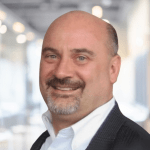 Tobin Anselmi joined The Christopher Group Consulting Services Division in 2020 as a Managing Partner & Talent Management Practice Leader. Tobin holds a Ph.D. in I/O Psychology. Over the last 30+ years, Tobin has served as a consultant to organizational leadership on human capital management issues such as talent management (selection, performance management, development, and movement), organizational effectiveness, change management, and leadership development. He is direct, engaging, and result-oriented. His practical recommendations to organizational issues are grounded in years of experience developing and implementing solutions around the globe. To learn more about Tobin visit his bio page.